The Power of Factorization By Grouping: Mastering Algebra with a Worksheet Advantage
The Power of Factorization By Grouping: Mastering Algebra with a Worksheet Advantage
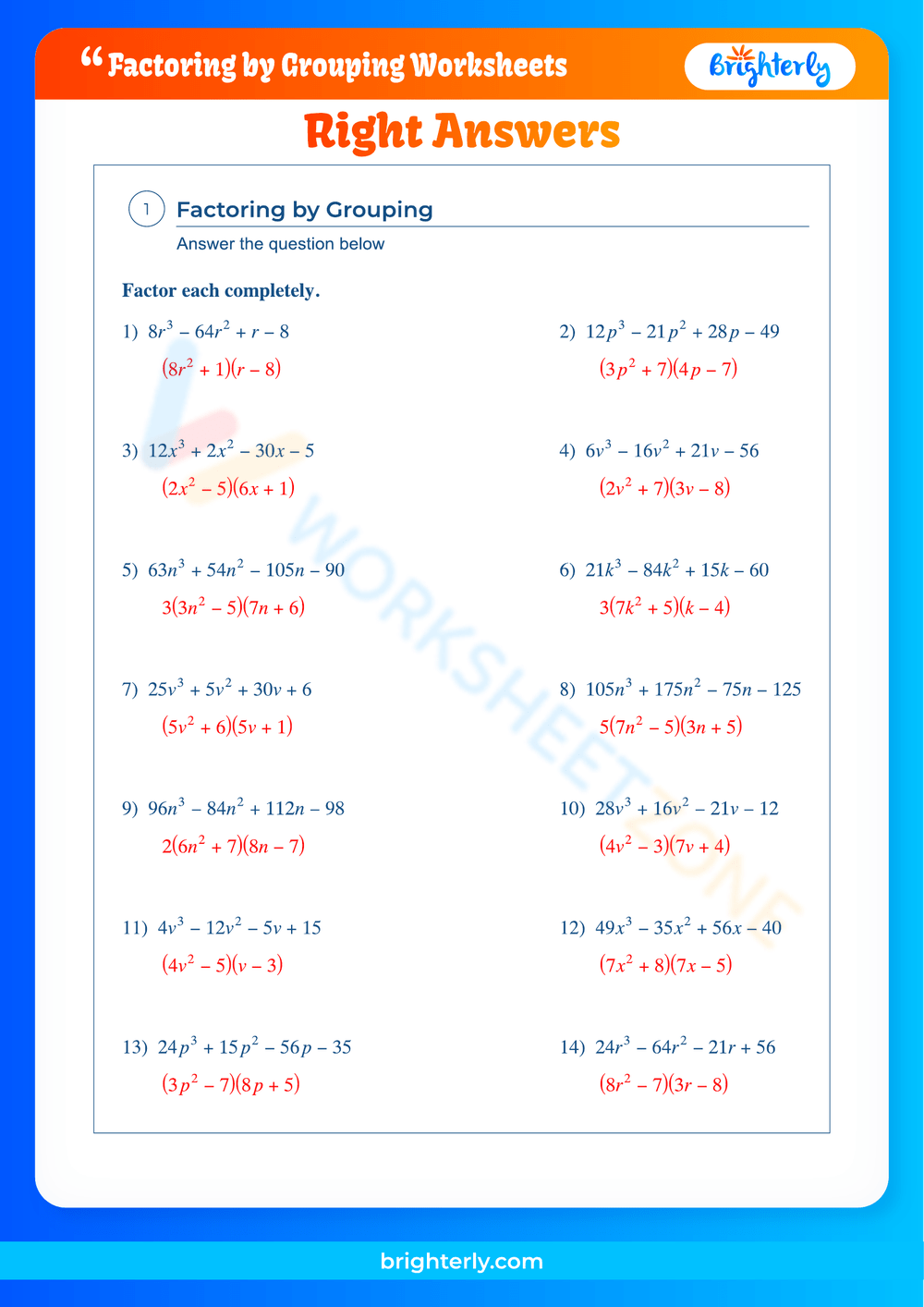
When students encounter quadratic expressions in algebra, factorization often appears as a stumbling block—until they learn factorization by grouping, a method that transforms complex polynomials into simpler, solvable forms. This technique not only demystifies factorization but empowers learners to tackle equations with confidence and clarity. At its core, factorization by grouping leverages strategic rearrangement of terms to reveal hidden common factors, turning seemingly impenetrable quadratics into manageable products.
With the right worksheets, this process becomes not just a textbook exercise but a dynamic, interactive experience that builds both skill and intuition. Understanding Factorization by Grouping: The Core Mechanism Factorization by grouping is a strategic algebraic procedure used primarily for polynomials with four or more terms, though its principles apply broadly to quadratic expressions. The method involves dividing a polynomial’s terms into two or more groups, each of which shares a common factor.
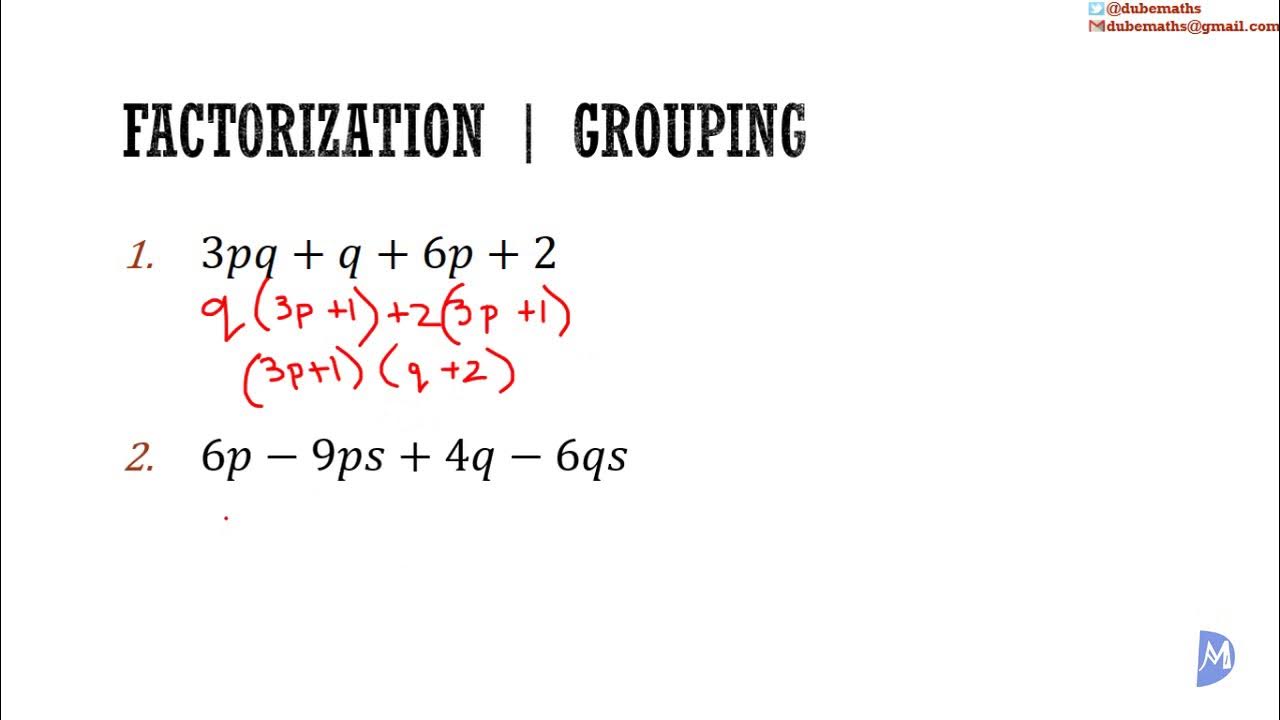
By factoring out those shared elements from each group, a common binomial factor emerges, enabling the entire expression to be expressed as a product of two binomials. Consider this foundational structure: ax + ax’ + bx + b’ = a(x + x’) + b(x + x’) = (x + x’)(a + b) This elegant pattern reveals how rearrangement and shared factors unlock deeper structure within the expression. In factorization by grouping worksheets, students practice this logic using varied numerical and variable-based problems, reinforcing the ability to spot and extract common components.
Proficiency here transforms algebra from passive memorization into active problem-solving.
How Factorization by Grouping Works: Step-by-Step Breakdown
Success with factorization by grouping follows a clear, repeatable sequence—ideal for instructional worksheets designed to build mastery. Follow these key steps: - **Step 1: Arrange Terms Strategically** Organize polynomial terms so that common factors can be grouped.For example, instead of writing `3x² + 6x + 4x + 8`, break it into `(3x² + 6x) + (4x + 8)`. This grouping primes the expression for effective factoring. - **Step 2: Factor Each Group Separately** Identify the greatest common factor (GCF) within each set.
From the previous example, factor `3x` and `6x` to get `3x(x + 2)`, and `4x` and `8` to yield `4(x + 2)`. - **Step 3: Identify and Extract the Common Binomial** Notice that both groups now contain the binomial `(x + 2)`. Factoring this out reveals `(x + 2)(3x + 4)`.
- **Step 4: Verify by Expanding** Multiply the factors to confirm the original expression: `(x + 2)(3x + 4) = 3x² + 4x + 6x + 8 = 3x² + 10x + 8`, which matches the input. Worksheets reinforce this process through consistent, progressively challenging exercises that train students to recognize patterns and apply logic without hesitation. Why Factorization By Grouping Worksheets Matter Educational research emphasizes that hands-on, guided practice solidifies abstract algebraic concepts.
Factorization by grouping worksheets provide precisely that, offering structured exercises that build both technical skill and conceptual understanding. - **Pattern Recognition Training**: Repeated exposure to grouped terms sharpens a student’s ability to detect hidden factorizations. - **Problem-Solving Confidence**: By solving varied problems, learners develop a toolkit to approach unfamiliar quadratics with structured thinking.
- **Error Identification**: Systematic worksheets encourage careful review—ill-placed signs or missed common factors become teachable moments. - **Real-World Relevance**: These skills extend beyond algebra, supporting logical reasoning in advanced mathematics, engineering, and data analysis. A well-designed worksheet balances simplicity and challenge, often starting with simple numerical examples before advancing to variable-heavy expressions—ensuring no crucial insight is lost in complexity.
Example: Applying the Method in Practice
Take the quadratic: 4x² + 10x + 8 Using factorization by grouping: Step 1: Group terms: (4x² + 10x) + (8) → but expand further for clarity: actually group first two and last two terms for optimal factoring. Wait—better grouping often improves insight. Try: (4x² + 8) + (10x) → no common factor beyond 4 outside.Try proper grouping: 4x² + 10x + 8 = 2(2x² + 5x + 4) → hard factor, so instead: Group as: (4x² + 2x) + (8x + 8) → factor: 2x(2x + 1) + 8(x + 1) → not matching. Correct grouping: 4x² + 10x + 8 →


Related Post

What Is Jba Airport? The Hidden Gateway Transforming Eastern Sudan
Is WorldOfBooksLegit the Trusted Library of the Digital Age? A Deep Dive into Its Validity and Value

Christian Brauns Wife Life Love And Family: A Deep Look at Faith, Partnership, and Private Blessings

TippsFRFiveHeartsUnderOneRoofAmPc: A Blueprint for Unity, Efficiency, and Modern Living


