In What Organelle Does Photosynthesis Occur? The Cell’s Green Powerhouse Revealed
In What Organelle Does Photosynthesis Occur? The Cell’s Green Powerhouse Revealed
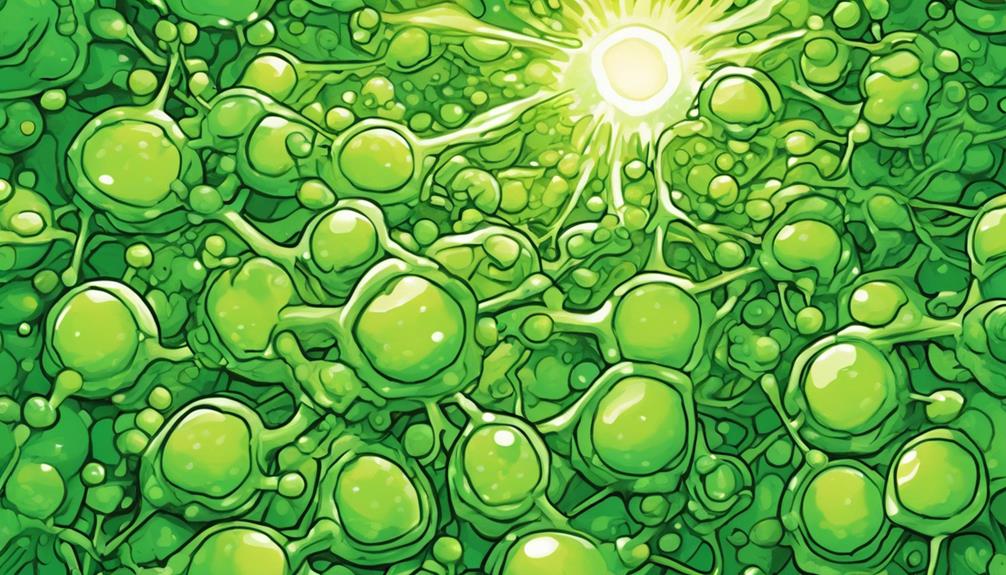
At the heart of plant and algal cells lies a remarkable organelle whose function defines life on Earth: the chloroplast. Responsible for converting sunlight into chemical energy, chloroplasts are the primary sites of photosynthesis—the process that fuels nearly every ecosystem. Without these intricate cellular factories, oxygen would be scarce, food chains would collapse, and life as we know it would not exist.
But where exactly does photosynthesis unfold within a cell? The answer lies in a specialized organelle whose structure and function are as fascinating as their role in sustaining life. chloroplasts are double-membraned organelles found predominantly in green plant tissues and photosynthetic algae.
Their outer and inner membranes enclose a vibrant interior where light-driven chemical reactions take place. Inside, a gel-like matrix called the stroma serves as the stage for key stages of photosynthesis, including the Calvin cycle, where carbon dioxide is transformed into glucose. Attached to the inner membrane are stacks of membrane-bound sacs known as thylakoids, which form structures called grana.
These thylakoid membranes house the light-absorbing pigments and electron transport machinery essential for capturing solar energy. The functional architecture of chloroplasts is a marvel of biological engineering. Electron microscopy reveals a labyrinthine arrangement of thylakoids, creating an expansive surface area ideal for light absorption.
Embedded within these membranes are chlorophyll molecules and accessory pigments like carotenoids, which broaden the spectrum of light captured. As sunlight strikes the chlorophyll, energy excites electrons, initiating a chain reaction that splits water molecules and generates oxygen—a byproduct now vital for aerobic respiration. Meanwhile, ATP and NADPH—energy-rich molecules produced in the light-dependent reactions—fuel the Calvin cycle occurring in the stroma, converting carbon dioxide into organic fuel.
biologists emphasize that chloroplasts are not static structures but dynamic entities capable of movement and division within plant cells. During daylight, chloroplasts distribute evenly within leaf mesophyll cells, optimizing light exposure. Recent studies show they can reposition in response to light intensity, ensuring efficient energy capture without damage.
Their evolutionary origin adds a layer of intrigue: chloroplasts arose from an ancient endosymbiotic event, when a photosynthetic cyanobacterium was engulfed by a primitive eukaryotic cell—a symbiosis that revolutionized planetary biology. Unlike mitochondria, which generate energy through cellular respiration, chloroplasts uniquely specialize in harnessing solar input. Though both organelles share evolutionary roots and contain DNA, their functions are diametrically opposed—one consumes energy, the other produces it.
In photosynthetic organisms, chloroplasts remain indispensable. As plant biologists note, “Without chloroplasts, Earth’s biosphere would cease to function as we know it—personally, emotionally, ecologically.” This singular role cements chloroplasts not just as cellular components, but as planetary lifelines. Understanding where photosynthesis occurs deepens appreciation for the cell’s inner workings.
The chloroplast, with its layered membranes, pigment-rich thylakoids, and enzymatic stroma, is more than a scientific curiosity—it is the quiet engine driving global oxygen levels and food production. Every leaf blade, every floating algal bloom, and every green shoot hinges on this tiny organelle’s ability to transform light into life. As research continues, the chloroplast remains a testament to nature’s precision and resilience, a vibrant microcosm where sunlight ignites the cycle of life itself.


Related Post
Honoring Lifetimes: A Deep Dive into Fitchburg’s Final Tributes from Sentinel and Enterprise Obituaries

Young Thug’s Early Instagram: A Snapshot of a Rap Revolution

Dean Doris Mountaineer Legacy Lost: Obituary of a Virginia Folk Hero

Ayaka’s Japanese Voice in Genshin: The Silent Heartbeat Behind Teyvat’s Idealized Charm